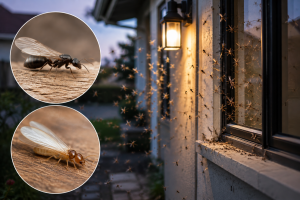
Most people in Gauteng do not think much about termites until they suddenly notice something unusual around the property.
Maybe it starts with mud marks along a wall. Sometimes it is damaged wood that sounds hollow when tapped. Other times, people first notice patches in the garden that look strange or small piles of soil appearing where they should not be.
The problem is that by the time visible signs appear, termites are often already well established.
Two of the most common and destructive termite species found around Gauteng are Harvester termites and Subterranean termites. Although many people group them together, they behave very differently and cause different types of damage.
Understanding the difference can help property owners react faster before repairs become expensive.
Why Termites Are Such A Common Problem In Gauteng
Gauteng’s weather creates ideal conditions for termite activity for large parts of the year. After rain, especially following dry periods, termite movement often increases quite noticeably around homes, complexes, warehouses, and commercial properties.
A lot of infestations actually begin outside long before anybody notices activity indoors.
In many cases, termites slowly establish themselves around gardens, paving, boundary walls, or damp areas near the structure first. From there, colonies continue expanding if nothing interrupts them.
Certain property conditions tend to attract termite activity more than others, including:
- Large gardens
- Constant irrigation or overwatered lawns
- Timber fencing
- Cracked paving
- Untreated wooden structures
- Drainage problems near foundations
One thing about termites is that they rarely disappear on their own once they settle into an area.
What Are Harvester Termites?
Harvester termites are fairly common throughout Gauteng and are usually easier to spot than subterranean termites because most of their activity happens above ground.
These termites are often seen collecting dry grass, tiny pieces of vegetation, and plant material which they carry back to the colony. You will sometimes notice narrow cleared pathways across soil or grass where they repeatedly travel.
People often spot them in:
- Gardens
- Open plots
- Around paving
- Near flower beds
- Along boundary walls
- Areas with dry grass or vegetation
Other warning signs may include:
- Small holes in the soil
- Loose sandy mounds
- Surface tunnels
- Thinning grass patches
- Increased insect activity near garden areas
Because they are mostly associated with outdoor spaces, many homeowners assume harvester termites are harmless. Unfortunately, that is not always true. Colonies can spread closer to structures over time, especially where timber or moisture is easily accessible.
What Are Subterranean Termites?
Subterranean termites are generally considered the more destructive of the two when it comes to buildings and structural damage.
Unlike harvester termites, these termites live underground and usually remain hidden while they feed. They build mud tunnels that protect them while travelling between the colony and timber sources.
That hidden behaviour is exactly what makes them so dangerous.
It is very common for subterranean termites to cause significant damage before a homeowner even realises there is a problem.
Some of the more common warning signs include:
- Mud tubes running along walls
- Hollow sounding skirtings or timber
- Bubbling paint
- Doors or windows suddenly sticking
- Uneven wooden flooring
- Sagging timber
- Small wings near windows during swarming periods
In many homes, Subterranean termites are discovered completely by accident during renovations, waterproofing work, or maintenance inspections.
The Biggest Difference Between Them
The main difference between Harvester termites and Subterranean termites comes down to where they operate and how they behave.
Harvester termites are usually visible outdoors and mainly gather plant material from the surface.
Subterranean termites stay hidden underground or inside structures while actively feeding on timber from the inside out.
That is why Subterranean termites are often responsible for far more costly structural damage if left untreated.
Why Store Bought Treatments Usually Do Not Solve The Problem
A lot of people try handling termites themselves first using hardware store sprays or general pest control products.
The issue is that visible termites are only a small part of the colony.
Spraying the insects you can see often does very little to eliminate the actual nest underground. In some situations, it can even cause the colony to shift and spread into different areas around the property.
Proper termite control involves identifying the termite species correctly, locating active areas, understanding the extent of the infestation, and applying the right treatment method for long term protection.
Early Detection Makes A Big Difference
One of the biggest mistakes property owners make is waiting too long before arranging an inspection.
The earlier termite activity is identified, the easier it usually is to control before major damage develops.
At Pestatermite, termite inspections are carried out to properly identify the species involved, assess the level of activity, locate possible nesting areas, and recommend the most suitable treatment solution for the property.
Whether it is Harvester termites damaging outdoor areas or Subterranean termites threatening structural timber, dealing with the problem early can save homeowners a significant amount of money and stress later on.
If you suspect termite activity around your home or business, it is always better to investigate it sooner rather than later.
Call 082 574 5455
Email pestatermite@mweb.co.za