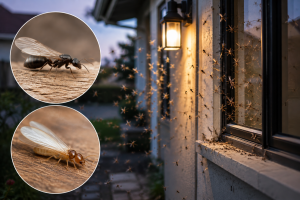
If you have ever walked into your kitchen and found a precise trail of ants moving straight toward a crumb or sugar spill, you know how quickly they can turn a home into their territory. Ants inside the house are one of the most persistent pest issues for homeowners. Their presence is not random. It is a clear sign that something indoors is meeting their needs for food, moisture and shelter.
At Pestatermite, we understand that eliminating ants starts with understanding why they are coming in and how their colony is operating behind the scenes.
What Attracts Ants in House
Ants are highly organised and motivated by three basic survival needs: food, water and protection from the elements. Once a single scout ant discovers a resource, it lays a pheromone trail that leads the entire workforce straight to it.
- Food Sources
Ants will capitalise on the smallest opportunity. Sugary spills, honey jars, open cereal boxes, dropped crumbs, juice residue, pet bowls and unsealed trash bins are all instant attractants.
Different species have different favourites:
- Odorous House Ants are drawn to sweets and sugary residues.
- Pavement Ants seek out grease, proteins and leftovers.
Even pantry packaging that appears sealed is often thin enough for ants to break into.
- Moisture and Water Access
Leaking pipes, damp cupboards, condensation and standing water in bathrooms create the ideal moisture route. When outdoor water sources dry up, ants immediately migrate inside to survive.
Moisture hotspots include:
- behind fridges or dishwashers
- under sinks
- window frames
- laundry corners
- around HVAC units
- Warm and Protected Nesting Sites
Some ants only forage indoors, while others choose to build their nests there. Wall cavities, insulation gaps, floor voids and damp corners offer the perfect refuge.
Carpenter Ants are especially concerning because they tunnel through wood to expand their nests, which can weaken structural areas over time.
How Are Ants Getting Inside?
Ants do not need an open door. They use microscopic access points with complete precision.
Common entry paths include:
- hairline cracks in walls or foundations
- gaps under exterior doors
- damaged window seals
- openings around plumbing and cable lines
- vents or roof gaps
Tree branches touching the roof can also act as bridges, allowing ants to bypass ground-level entry entirely.
How to Know if Ants Are Nesting Inside
A single line of ants is usually a foraging team. A constant cycle of trails, even after cleaning, signals something deeper.
Clues that a colony may be indoors:
- ant activity in winter months
- recurring waves after cleaning
- sawdust-like wood shavings from Carpenter species
- rustling sounds in wall spaces
If ants return within hours of wiping them away, the nest may be established inside your structure.
Do DIY Ant Solutions Work?
Wiping away visible ants removes the scouts but not the colony. Supermarket sprays kill only the workers on the surface. The queen, sheltered deep within the nest, continues reproducing thousands more.
DIY can temporarily reduce activity:
- store food in airtight containers
- clean sugar and grease immediately
- fix dripping pipes or damp areas
- trim back exterior foliage
- seal cracks and door gaps
But if the nest remains active, ants will continue to return.
Why Professional Ant Control Is Necessary
To stop an infestation for good, the colony must be located and treated. A professional approach targets more than the visible trail.
A qualified pest control specialist will:
- Identify the specific ant species and its food preference.
- Trace entry routes and foraging lines.
- Locate the nest and neutralise the queen.
This approach prevents recurring infestations and protects against structural damage from species that excavate through wood.
If ants are repeatedly returning despite cleaning and DIY attempts, it is time for a complete assessment. A professional inspection will identify what is drawing them in, where they are entering and whether they have already established a nest inside.
Contact Pestatermite today on 082 574 5455 or email pestatermite@mweb.co.za for a thorough inspection and a customized plan to send those marching ants packing!
Say goodbye to indoor trails, counter invasions and hidden colonies. Our team will ensure they stay outside where they belong.