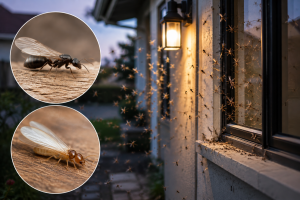
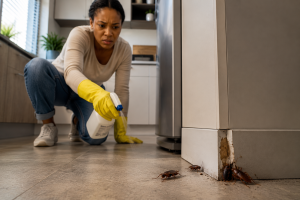
An ant infestation in the home rarely starts as a major concern. It often begins with a few ants along a kitchen counter or skirting board, easy to clean up and ignore. The problem is that ants do not enter homes by chance. When they appear indoors, it usually means your property has already been marked as a reliable source of food, moisture, or shelter.
Many homeowners experience the same frustration. They clean thoroughly, spray visible ants, and seal obvious gaps, only to find the ants returning days later. This happens because an ant infestation in the home is never just about the ants you can see. Behind the scenes, a well-organized colony is already established and working continuously.
Why an Ant Infestation in the Home Develops
Ants are driven by efficiency. Once a worker ant finds food or water, it leaves a scent trail that leads the rest of the colony directly back to the source. Even small crumbs, sticky spills, or grease residue can trigger ongoing activity.
Moisture plays an equally important role. Leaking pipes, damp cupboards, condensation near sinks, and poorly ventilated bathrooms create ideal conditions for ants to survive. During warmer months, colonies expand quickly, increasing the likelihood of an ant infestation in the home.
In many cases, nests are located outside, and ants enter through cracks in walls, paving, or foundations. In other situations, nests form inside wall cavities or beneath floors, making the infestation harder to detect and control.
When an Ant Infestation Becomes a Bigger Issue
An occasional ant sighting is not unusual. A persistent ant infestation in the home is different. If ants return repeatedly to the same areas despite regular cleaning, it is a clear sign the colony is well established.
Ants move between waste areas and food preparation surfaces, increasing the risk of contamination. Some species bite or sting, which can be unpleasant and concerning for children and pets. Over time, nesting activity can also affect paving, walls, and structural areas.
Left untreated, an ant infestation in the home becomes more difficult to manage as colonies grow larger and spread.
Why DIY Solutions Often Fall Short
Most store-bought ant treatments are designed to kill on contact. While this may reduce visible activity briefly, it does not address the nest or the queen. As long as the colony remains intact, ants will continue to return.
In some cases, incorrect treatment causes ants to relocate deeper into the structure or split into multiple nests. This can worsen an existing ant infestation in the home rather than resolve it.
Effective control requires a strategic approach based on ant behaviour, not guesswork.
Professional Treatment for Ant Infestation in the Home
Pestatermite approaches ant infestations with long-term results in mind. Each ant infestation in the home is assessed to identify the species involved, nesting locations, and access points into the property.
Treatments are selected to disrupt the colony and target the nest itself, rather than just surface activity. Homeowners are also advised on practical steps to reduce conditions that attract ants, helping to prevent future infestations.
This approach delivers reliable control and reduces the chances of recurring problems.
When an Ant Infestation in the Home Keeps Returning
If ants have become a regular presence in your living space, it usually means the infestation is established rather than occasional. Repeated cleaning and spraying may slow activity temporarily, but without addressing the nest, the problem continues unnoticed.
Pestatermite provides professional solutions focused on resolving an ant infestation in the home properly, not offering short-term relief. An inspection can provide clarity on what is driving the activity and how best to stop it.
For expert assistance, contact Pestatermite at info@pestatermite.co.za and let our team help restore comfort and control in your home.