The holiday may be over, but there is one souvenir nobody wants to unpack.
Bed bugs can travel home inside luggage, clothing, handbags and other personal belongings. They do not fly or jump. Instead, they hide in small seams and folds until they are carried to a new location. A hotel room can look clean and well maintained while still having bed bug activity, which means the risk is not limited to budget accommodation or visibly untidy spaces.
Knowing what to check after a trip can help you identify a potential problem before the insects spread through your home.
How Bed Bugs Get into Your Luggage
Bed bugs are attracted to places where people sleep or rest for extended periods. In accommodation, they may hide along mattress seams, behind headboards, inside bedside furniture or in gaps around the bed.
A suitcase left open on the floor or placed directly on the bed gives them an opportunity to crawl inside. They may settle in the lining, around zips, beneath luggage tags or between folded clothes.
They can also be picked up in other places where belongings are stored close together, including public transport, waiting areas and shared accommodation. You may never see the insect during your trip because bed bugs usually remain concealed during the day.
Do Not Take Your Suitcase Straight to the Bedroom
After arriving home, avoid placing your luggage on the bed, carpet or upholstered furniture. These areas provide plenty of hiding places if an insect has travelled with you.
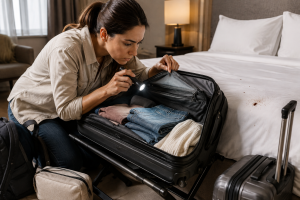
Open and inspect the suitcase in a well-lit area with a smooth floor, such as a bathroom, garage or tiled entrance. This makes it easier to spot anything that falls from the bag and reduces the chance of bed bugs disappearing into fabric or floor coverings.
Check the outer pockets, handles, wheels, zip tracks, seams and lining. A torch can help you examine darker folds and corners.
What Do Bed Bugs Look Like?
Adult bed bugs are small, flat and oval-shaped. They are usually reddish-brown, although their appearance can change after feeding. Younger bed bugs are smaller and lighter in colour, making them more difficult to notice.
You should also look for evidence rather than only live insects. Possible signs include tiny dark marks, pale shed skins, small eggs or rusty-coloured stains on fabric.
A few unexplained marks on your skin do not confirm bed bugs. Different insects, allergies and skin conditions can produce similar reactions. Physical evidence around sleeping areas provides a more useful indication.
Handle Travel Clothing Carefully
Remove clothing directly from the suitcase rather than carrying the open bag through the house. Wash suitable items according to their care labels and use a heated drying cycle where the fabric allows.
Remember to check items that may not immediately go into the washing machine. Shoes, toiletry bags, hats, jackets and fabric travel accessories can all contain folds or seams where insects could hide.
Vacuuming the suitcase may help remove loose insects or debris, but the vacuum contents should be sealed and disposed of outside immediately. The bag itself should then be stored away from bedrooms and living areas until you are confident there is no activity.
Watch Your Sleeping Area After Returning
Bed bug evidence may not be noticeable on the first day. Over the next few weeks, pay attention to the mattress seams, base, headboard and nearby furniture.
Look for repeated dark spotting, shed skins or live insects. You may also notice marks on bedding or new skin irritation after sleeping. Check luggage storage areas as well, particularly if the suitcase was unpacked in a bedroom.
Avoid moving bedding, furniture or belongings into another room if you suspect bed bugs. This can spread the problem and make treatment more complicated.
Why DIY Sprays Can Make the Situation Worse
Bed bugs hide in extremely narrow spaces, so spraying the visible surface of a mattress may not reach them. Some products can also cause the insects to move deeper into furniture, walls or nearby rooms.
Using multiple household chemicals without identifying the affected areas can create unnecessary exposure while leaving eggs and concealed insects behind. Professional bed bug control focuses on locating the harbourages, assessing how far the activity has spread and applying an appropriate treatment plan.
Act Before They Settle In
Bringing home one bed bug does not always lead to a major infestation, but ignoring suspicious signs gives the insects time to reproduce and move into additional rooms.
If you find a live insect, keep it safely contained for identification and avoid crushing all the evidence. Contact Pestatermite for a professional bed bug inspection and treatment recommendation.
A careful luggage check after travelling only takes a few minutes. It could save you from dealing with a far more disruptive pest problem later.