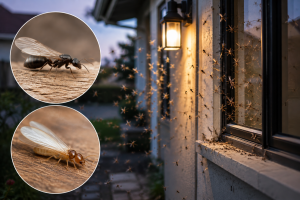
What do termites eat is a question homeowners only consider once signs of damage begin to appear. The answer is simple. Termites eat cellulose, a natural material found in wood, paper, cardboard, plants, and certain fabrics. Because these materials exist throughout your home, termites see your property as a continuous supply of food that allows them to feed, grow, and spread without interruption.
Cellulose forms the structural support of plants and timber. To us, it is a building material. To termites, it is the foundation of their survival. Understanding how termites access cellulose inside your home is key to preventing long term infestation and structural damage.
What Do Termites Eat in Your Home
Once termites enter your property, they do not wander or search randomly. Their diet is already determined by cellulose-based materials that are readily available indoors. The following items are among their most common food sources:
Wood including framing, ceilings, flooring, skirtings, furniture, window frames, and roof beams
Paper and cardboard such as stored boxes, books, files, packaging materials, and archived documents
Textile fibers like cotton and linen found in upholstery and older furniture pieces
Drywall paper layers that form the surface of interior walls
Outdoor vegetation including stumps, rotting branches, mulch piles, and damp leaf build up
Termites do not digest cellulose independently. Inside their gut lives a community of microorganisms that break cellulose down into energy. This process allows them to survive entirely on materials that would otherwise be indigestible.
Different Termites and Their Feeding Behaviour
While all termites eat cellulose, their behaviour and feeding movement differ between species.
Subterranean termites are heavily dependent on moisture and remain connected to soil through mud tubes. They are drawn to softer woods and damp timber. Their feeding pattern typically follows the grain which results in hollow sounding wood that may appear intact from the outside.
Drywood termites do not require soil access. They live within the timber they consume and use the natural moisture inside wood to survive. They are commonly found in roof structures, furniture, wall cladding, and skirtings. A common indication of their presence is frass which appears as small, hard pellets pushed out of exit holes.
Materials Termites Chew Through to Reach Food
Termites do not always consume everything they damage. Some materials are chewed only to open a path to the cellulose they truly want.
Foam insulation and soft plastic piping can be tunneled through when blocking direct access to timber
Caulking and grout may be gnawed away to create entry points along wall edges or floor gaps
Paint is often left as a shell while the wood beneath it is consumed which results in bubbling, peeling, or soft surfaces
Many homeowners assume varnish or paint will protect wood. Termites only need a small crack, untreated joint, or exposed edge to enter and begin feeding internally.
Reducing the Risk of Termite Infestation
Termite prevention is more effective and economical than structural repair. You can make your home less attractive to termites by reducing moisture and improving storage habits.
Store wood piles and garden debris away from exterior walls
Repair leaks promptly and ensure drainage directs water away from the foundation
Avoid storing cardboard and document boxes directly on floors in garages or storerooms
Allow airflow behind large furniture pieces to prevent hidden moisture against walls
If you notice hollow sounding timber, frass deposits, bubbling paint, mud tubes, or unexplained wall damage, termites are already active.
Take Immediate Action
Termites work quietly and consistently which is why early detection is critical. Over the counter treatments mask the surface but do not remove the colony. A professional inspection identifies the species, entry points, and structural risks before further feeding occurs.
Do not allow your home to serve as their ongoing food source. Contact Pestatermite for a full inspection and a treatment plan designed for your property.
Call 082 574 5455 Email pestatermite@mweb.co.za Protect your structure before termites consume it from the inside out.