Understanding and Managing Lawn Infestations
When most people think of termites, they imagine damage to wooden structures, roofs, or furniture. However, termites are not limited to feeding on timber, some species, especially those common in South Africa, thrive in lawns and gardens. These grass-eating termites can cause extensive damage to turf, leaving patches of dead grass and dry, uneven soil.
In this guide, we’ll explore why termites invade lawns, how to recognise the signs, and what steps you can take to prevent or control them effectively.
Why Termites Live in Grass
Termites feed on cellulose, an organic compound found in plants and plant-based materials such as grass, leaves, and wood. Lawns provide an ideal food source, especially in warm climates with well-irrigated soil.
The two most common lawn-damaging species in South Africa are:
– Harvester termites (family Hodotermitidae) These termites forage above ground, cutting and carrying grass blades back to their nests. They are most active during the day.
– Subterranean termites (family Termitidae) These live below ground and feed on decaying roots, organic matter, and sometimes healthy grass roots, weakening turf from underneath.
Both types build complex underground tunnel networks, allowing them to spread across large garden areas undetected.
Signs of Termites in Your Lawn
Because termite colonies operate underground, they can be difficult to spot until significant damage occurs. Look out for these common signs:
– Bare or thinning patches of grass that spread outward in circular or irregular patterns.
– Cut or missing grass blades, often appearing as if trimmed with scissors.
– Small mounds of loose soil or raised ridges, especially early in the morning.
– Grass that pulls out easily, due to weakened roots.
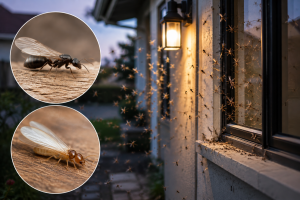
– Discarded wings near windows, patios, or garden lights after a termite swarm.
These symptoms often resemble those caused by drought or nutrient deficiency, but if watering and fertilising don’t help, termites are a likely culprit.
How Termites Damage Lawns
Termite activity in lawns affects both the appearance and health of your garden.
1. Grass Consumption
Harvester termites cut grass blades close to the ground and carry them back to the nest for storage. Subterranean species feed on roots and organic matter, causing grass to die from below.
2. Soil Disruption
Their tunnelling behaviour loosens soil and alters moisture balance. Over time, the ground becomes uneven and compacted, making it difficult for new grass to establish.
3. Increased Water Loss
Bare soil loses moisture quickly, forcing homeowners to water lawns more often, which ironically encourages further termite activity by increasing soil humidity.
If left untreated, a single colony can destroy large areas of turf in weeks, and neighbouring colonies can spread rapidly through connected root systems.
Preventing Termite Infestations in Lawns
Preventing termites in your grass begins with good lawn care and environmental management. Healthy, well-maintained grass is far less attractive to termites. Here’s how to make your garden less inviting:
– Keep grass healthy and dense through regular fertilising and aeration.
– Avoid overwatering and fix leaks from taps or irrigation systems. Termites prefer moist, compacted soil.
– Remove dead vegetation, mulch, and lawn clippings that provide cellulose for termites to feed on.
– Store firewood, compost, and timber away from lawns and structures.
– Maintain clean lawn edges and flowerbeds, where termites often begin nesting.
– Schedule routine inspections, especially before and after the rainy season when termite activity increases.
Simple maintenance and early detection go a long way towards preventing costly lawn repairs.
Professional Termite Treatment for Lawns
While DIY sprays may appear to help, most fail to reach the underground colony where the problem begins. Professional treatment is the only way to achieve complete, long-term control.
1. Inspection and Assessment
A trained pest control technician identifies the termite species and locates the nest or active tunnels. Understanding their behaviour is crucial to applying the correct treatment.
2. Soil Treatment
A registered, environmentally responsible termiticide is applied below the grass surface to form a barrier around the affected area. This kills termites in contact and prevents new infestations.
3. Baiting Systems
For harvester termites, baiting methods can be used around active zones. Worker termites carry bait back to the colony, eliminating it from within over time.
Professional termite control ensures safety, effectiveness, and compliance with SABS and SANS regulations — providing peace of mind that your lawn is properly protected.
Eco-Friendly and Safe Solutions
At Pestatermite, we use targeted treatments that are safe for lawns, pets, and families. Our solutions combine modern chemical barriers with eco-conscious methods, reducing environmental impact while ensuring reliable results.
Our technicians also provide advice on long-term prevention and maintenance, helping homeowners keep lawns termite-free through healthy soil practices and proper drainage.
A Final Word
A lush, healthy lawn is a valuable feature of any home, but termites can quietly undo months of care in a matter of weeks. By recognising early signs, maintaining good garden hygiene, and working with trusted professionals, you can stop these silent destroyers before they take hold.
If you’ve noticed patches of dying grass or suspicious soil activity, it’s worth getting a professional lawn inspection. The experts at Pestatermite are ready to assess, treat, and protect your property using safe and proven methods.
Visit www.pestatermite.co.za to book an inspection or request advice on lawn termite prevention. A simple check today could save you major repair costs tomorrow.